Introduction
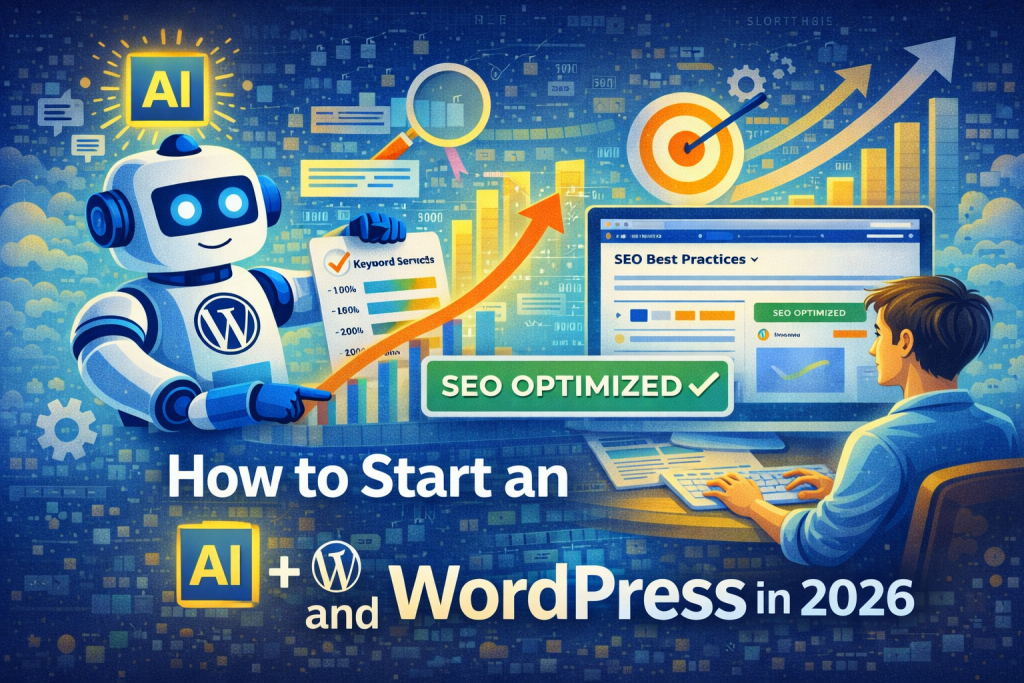
Starting a blog used to feel overwhelming. You had to come up with ideas, write every post manually, learn SEO from scratch, and hope something eventually ranked. In 2026, everything has changed. With the rise of AI, the process has become faster, smarter, and far more scalable. That’s why understanding how to start an SEO blog with AI and WordPress in 2026 is one of the most valuable skills you can develop right now.
However, while AI makes content creation easier, it also increases competition. More people are publishing content than ever before. This means success no longer comes from simply creating posts—it comes from building a system that consistently produces optimized, high-quality content.
In this guide, you’ll learn exactly how to start an SEO blog using AI and WordPress, how to structure your content for rankings, and how to scale your traffic over time without burning out.
Why AI + WordPress Is the Best Combination for Blogging
The Power of WordPress
WordPress remains the most flexible and powerful platform for blogging. It gives you full control over your website, your content, and your SEO strategy. Unlike closed platforms, WordPress allows you to customize everything—from design to performance to optimization.
More importantly, it integrates perfectly with plugins that enhance your workflow. This is where AI comes in.
How AI Changes Blogging
AI removes the biggest bottleneck in blogging: time. Instead of spending hours writing and planning, you can generate content, structure posts, and optimize SEO in a fraction of the time.
However, AI is not a magic solution. It works best when combined with a clear strategy. When used correctly, it allows you to scale content without sacrificing quality.
Step 1: Choosing Your Niche and Direction
Why Your Niche Matters
Before you start creating content, you need to decide what your blog will focus on. Your niche determines your audience, your keywords, and your long-term growth potential.
Choosing a niche that is too broad makes it harder to rank. On the other hand, choosing something too narrow can limit your content opportunities. The goal is to find a balance.
Finding Opportunities in 2026
Look for niches that:
- Have consistent search demand
- Allow for multiple content topics
- Are not overly saturated
AI tools can help identify keyword opportunities, but your direction should always align with your interests and long-term goals.
Step 2: Setting Up Your WordPress Blog
Getting Your Site Ready
Setting up a WordPress blog is straightforward, but it’s important to do it correctly. You’ll need a domain name, hosting, and a clean theme.
Once your site is live, focus on:
- Fast loading speed
- Mobile responsiveness
- Clean design
These factors impact both user experience and SEO.
Essential Plugins for SEO and AI
To build an effective blog in 2026, you need the right tools. SEO plugins help optimize your content, while AI plugins streamline your workflow.
Combining these tools allows you to create, optimize, and publish content efficiently.
Step 3: Keyword Research and Content Planning
Understanding Search Intent
Every successful blog starts with keyword research. However, it’s not just about finding keywords—it’s about understanding what users are looking for.
If someone searches for a guide, they expect detailed information. If they search for a comparison, they want clear differences. Matching this intent is critical.
Using AI for Keyword Ideas
AI can generate keyword ideas based on your niche. Instead of manually brainstorming topics, you can quickly build a list of content ideas.
This saves time and ensures your content aligns with real search demand.
Step 4: Creating SEO Content with AI
From Idea to Blog Post
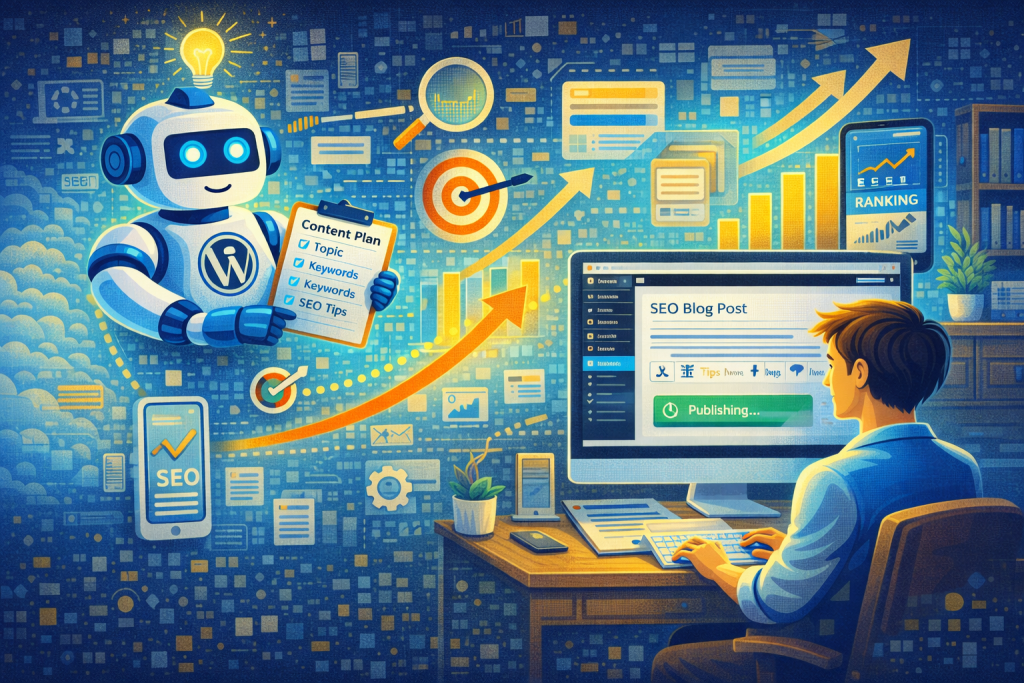
Once you have your keywords, the next step is creating content. This is where AI becomes incredibly powerful.
Instead of starting from a blank page, you can generate structured drafts that include:
- Clear headings
- Logical flow
- SEO-friendly structure
This allows you to focus on refining and improving the content rather than creating it from scratch.
Maintaining Quality
While AI speeds up content creation, quality still matters. Always review your content to ensure it is accurate, readable, and valuable.
Think of AI as a foundation, not the final product.
Step 5: On-Page SEO Optimization
What Makes Content Rank
Creating content is only half the process. Without proper optimization, your blog posts will struggle to rank.
Key elements include:
- Titles with your main keyword
- Clear heading structure
- Internal linking
- Optimized images
These factors help search engines understand your content and improve visibility.
Automating Optimization with AI
AI tools can automate many of these steps. Instead of manually optimizing every detail, you can generate SEO-friendly titles, descriptions, and structure instantly.
This makes the process faster and more consistent.
Step 6: Publishing and Staying Consistent
The Importance of Consistency
One of the biggest factors in SEO success is consistency. Publishing regularly signals to search engines that your site is active.
A consistent schedule also helps build momentum. Over time, your content library grows, increasing your chances of ranking.
Building a Content System
Instead of relying on motivation, create a system. Plan your content in advance and stick to a schedule.
AI makes this easier by reducing the time required to produce each post.
Step 7: Scaling Your Blog with AI
Turning One Blog into Many
AI allows you to expand on ideas quickly. A single topic can be turned into multiple blog posts, each targeting different keywords.
This helps you build topical authority and increase your visibility.
Automating Your Workflow
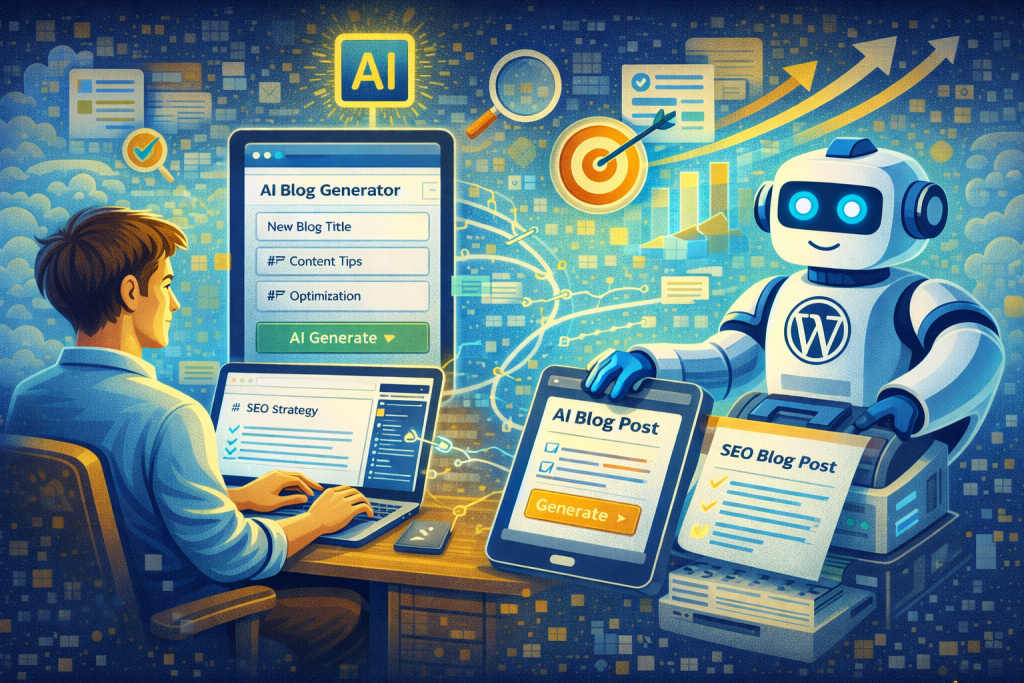
As your blog grows, managing everything manually becomes difficult. AI tools help automate repetitive tasks, allowing you to focus on strategy and growth.
Common Mistakes When Starting an SEO Blog
Expecting Instant Results
SEO takes time. It’s important to be patient and focus on long-term growth.
Publishing Without a Plan
Random content rarely performs well. A clear strategy is essential.
Ignoring Optimization
Even great content can fail if it’s not optimized properly.
AI Blogging vs Traditional Blogging
Traditional Blogging
Manual blogging requires significant time and effort. While effective, it can be difficult to scale.
AI Blogging
AI blogging combines speed with structure. It allows you to produce more content while maintaining consistency.
This makes it ideal for modern SEO strategies.
Advanced Strategies for Faster Growth
Topic Clusters
Creating related content around a central topic improves SEO performance.
Internal Linking
Connecting your posts strengthens your site structure and improves rankings.
Content Updates
Updating existing posts helps maintain relevance and improve performance.
Conclusion
Learning how to start an SEO blog with AI and WordPress in 2026 is about building a system that combines efficiency with strategy. AI makes content creation faster, but success still depends on quality, consistency, and optimization.
By choosing the right niche, planning your content, and using AI to streamline your workflow, you can create a blog that grows over time. The key is to stay consistent and continuously improve your strategy.
The opportunity has never been bigger. The tools are available. The only thing left is to take action.
Start Your AI SEO Blog Today
If you’re ready to simplify your workflow and start building a high-performing blog, it’s time to use a tool designed for modern content creators.
👉 https://plixoratech.com/plixora-ai-blog-generator/
With this plugin, you can generate SEO-optimized blog posts, streamline your workflow, and scale your content faster—all directly inside WordPress.
Stop overthinking the process and start building a system that drives real results.
🏷️ SEO TAGS: start SEO blog WordPress 2026, AI blogging WordPress guide, how to blog with AI, WordPress SEO strategy beginner, AI content creation WordPress, blog traffic growth tips, SEO blogging workflow, AI blog generator plugin, content marketing WordPress, rank blog posts faster